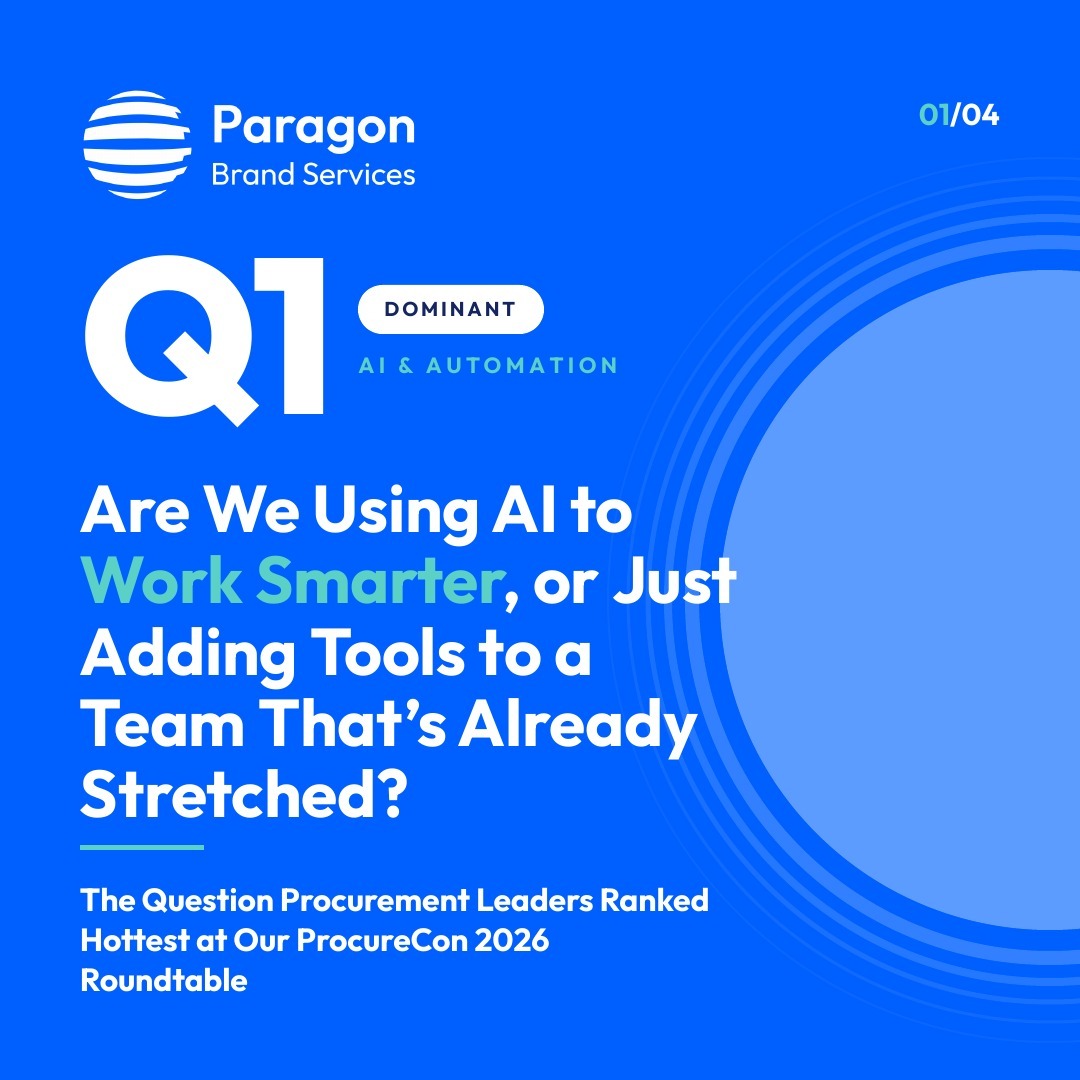
The 10 Questions Every Procurement Leader is Secretly Asking.
At ProcureCon 2026 we hosted a roundtable of procurement leaders on one topic: the questions they're asking themselves, not the ones in the board paper. Ten questions, five themes, ranked by the room. We're not publishing them in full. We'll send them to you.
The context for 2026/27
Procurement is no longer a cost centre. It's a resilience function. Sources: Ivalua and industry surveys, 2026.

What We Heard In The Room At ProcureCon.
Over recent months we gathered the questions procurement leaders are quietly asking themselves, in conversations across retail, FMCG, financial services and hospitality. Then we hosted a roundtable at ProcureCon 2026 and put them to a room of their peers.
The leaders present ranked them by how hard each one is being felt. Three questions, on AI, risk and cost, came out well ahead of the rest. The questions about proving the function's worth and about real influence at the brief stage ranked lower, and drew some of the most candid discussion.
Ten questions, each with what it really means underneath the operational framing.
Ranked by heat across the full account set: dominant, high priority, rising and enduring.
Grouped into five themes, so a leader can find the two or three that matter most to them.
The topics leaders raised in their own words, matched to each question. No vendor pitch in the middle. The answers sit at the end, clearly marked.
Short on time? The white paper is a twelve-minute read. We'll email it to you when it's released, with nothing else attached.
Register for the white paperFive Themes. Ten Questions. One Honest Read.
The questions cluster into five recurring themes. The themes we'll share here. The questions, and what sits underneath each one, are in the paper.
The ten questions, ranked by heat
We're Keeping The Wording For The Paper. Here's What Each One Is About.
Each card shows the theme, how the room ranked it, and the tension underneath. The deep dive into the questions and what they actually mean, arrives with the whitepaper.
AI & automation
Are we using the right tools to work smarter, or just adding to the pile?
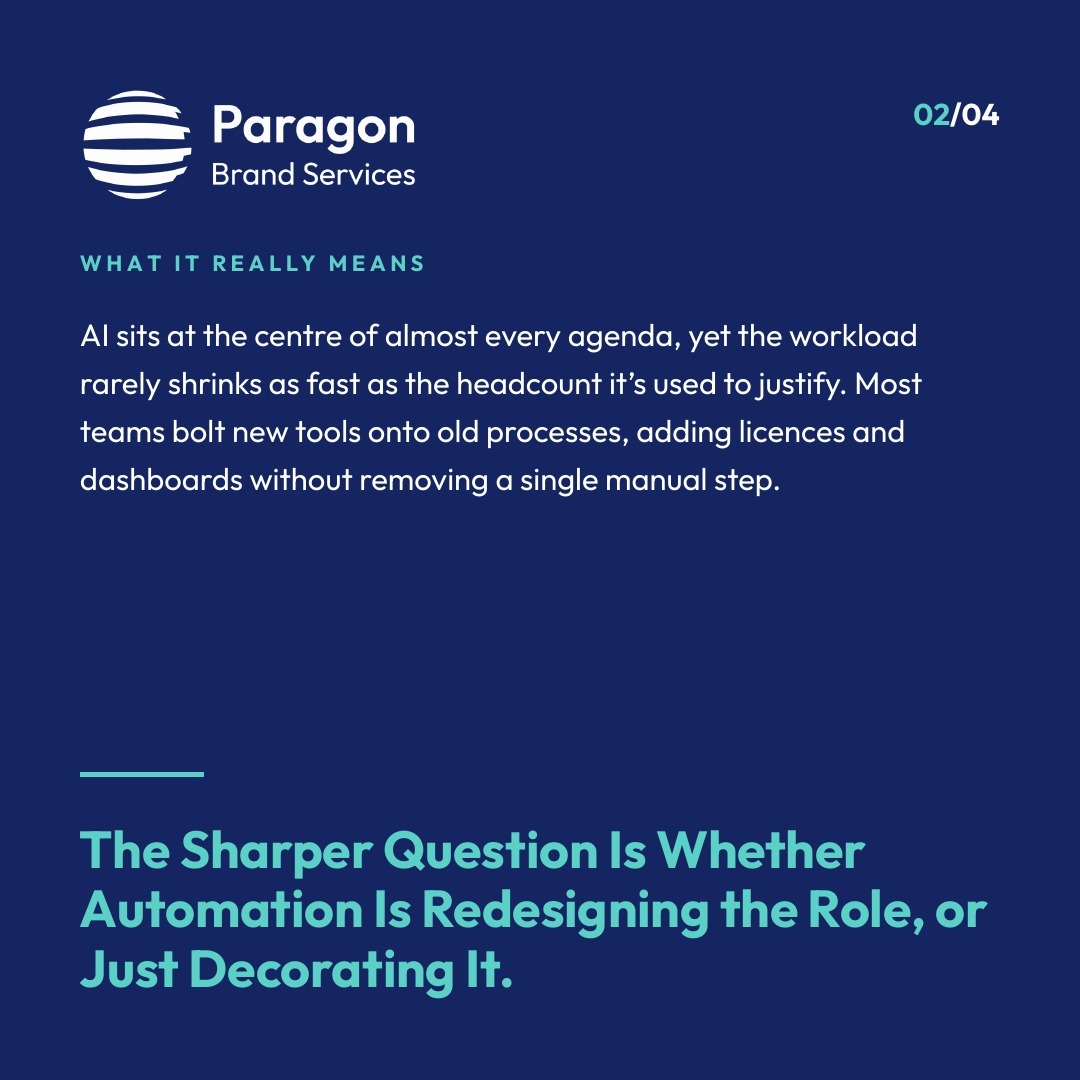
Whether automation is redesigning the role or just decorating it: new licences and dashboards added, not a single manual step removed.
Risk & resilience
A tidy dashboard can be the most dangerous artefact in the room. It turns the absence of red flags into a feeling of safety.
Cost & value
Savings is the most fragile number a function reports. Headline figures hide the rework, rush fees and quality trade-offs that hand the saving back.
Technology & data
Platforms bought on the promise of transformation often automate the same broken process at higher speed. The mess simply arrives faster.
Consolidation & risk
Every supplier removed is a fallback removed. Whether a partner spreads risk across a governed network or stacks it in one place is the live question.
Sustainability & compliance
Commitments are easy at tier one. Visibility fades fast below it, and PPWR is turning a reporting line into a real cost and a live compliance risk.
Standardise vs localise
Over-standardise and the work stops landing in market. Fragment and cost and quality control go with it. Most leaders are being asked to do both.
Proving worth
Reported value sits in a deck. Remembered value gets the function into the room where budgets are decided. The test is who can retell it unprompted.
Partnership
A seat at the table isn't the same as influence over what lands on it. Run purely as a tender, procurement gets what it asked for and rarely the better idea.
Channels & formats
Print volumes fall, yet print stays effective where a physical presence drives the sale. The risk is defaulting to formats the supply chain was built for, not the ones the moment needs.
Twelve-minute read. Sent to your work email, no follow-up unless you ask for one.
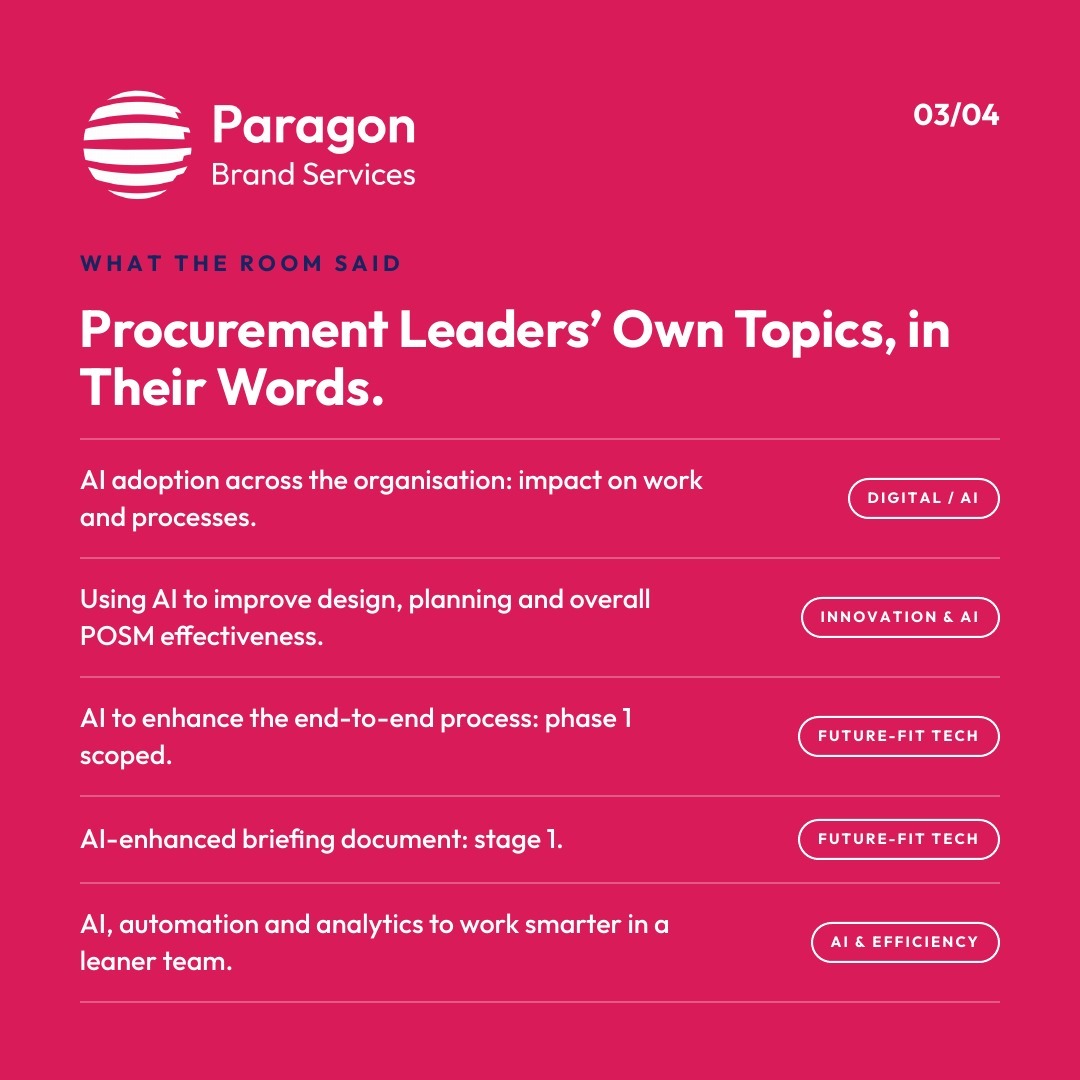
Topics the room raised, in their own words
- AI-enhanced briefing documents
- Working smarter in a leaner team
- Watching brief on single points of failure
- Savings targets plus PPWR compliance costs
- Standardising POSM across countries
- Does the integrator model add value?
- Re-engineering permanent POSM to cut logistics
- Energy costs across the venue estate
- Campaign ROI, spend against total sales
- Print versus digital
- Central print, print-on-demand, in-store
- Non-traditional selling spaces
- Carbon balancing to carbon negative
What happens next
Ten Questions. Six Fortnights. One Playbook, Answered.
The white paper opens a series. Every fortnight we take one or two of the questions, work through them with one of our centres of excellence and publish something useful. In December the whole series becomes a playbook: ten questions, answered. Register now and every piece arrives as it lands.
w/c 5 October
The ten questions
The ranked list from the ProcureCon roundtable, with what each question really means.
Get the white paper →w/c 19 October
Working smarter, or just adding tools?
AI amplifies the data and process it's given. Most data isn't AI-ready.
Data readiness checklistw/c 2 November
Managing risk, or the look of it?
Consolidation without a single point of failure. The integrator test.
One-page integrator testw/c 16 November
Does your value story protect you?
Savings is the most fragile metric. Total cost of ownership across print, digital and on-demand.
TCO working sessionw/c 30 November
How exposed are you?
PPWR, tier-two visibility, and standardising specs without losing local relevance.
PPWR readiness callw/c 14 December
Playbook: ten questions, answered
All five themes, each ending with what good looks like, plus a 30-minute webinar.
Register for the playbook →Where the questions get answered
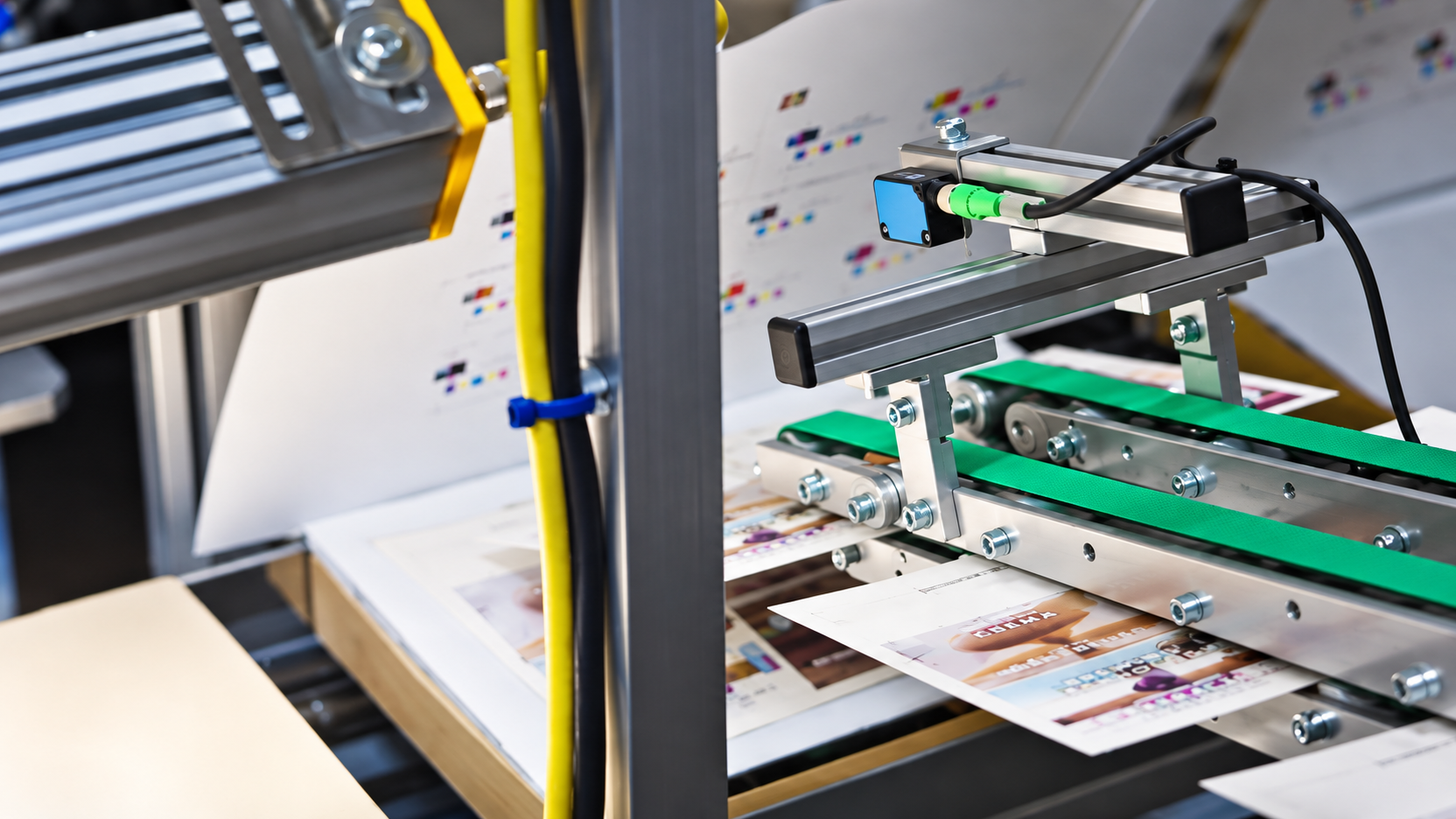
From The Press Floor To The Shelf, We Own The Execution The Questions Are About.
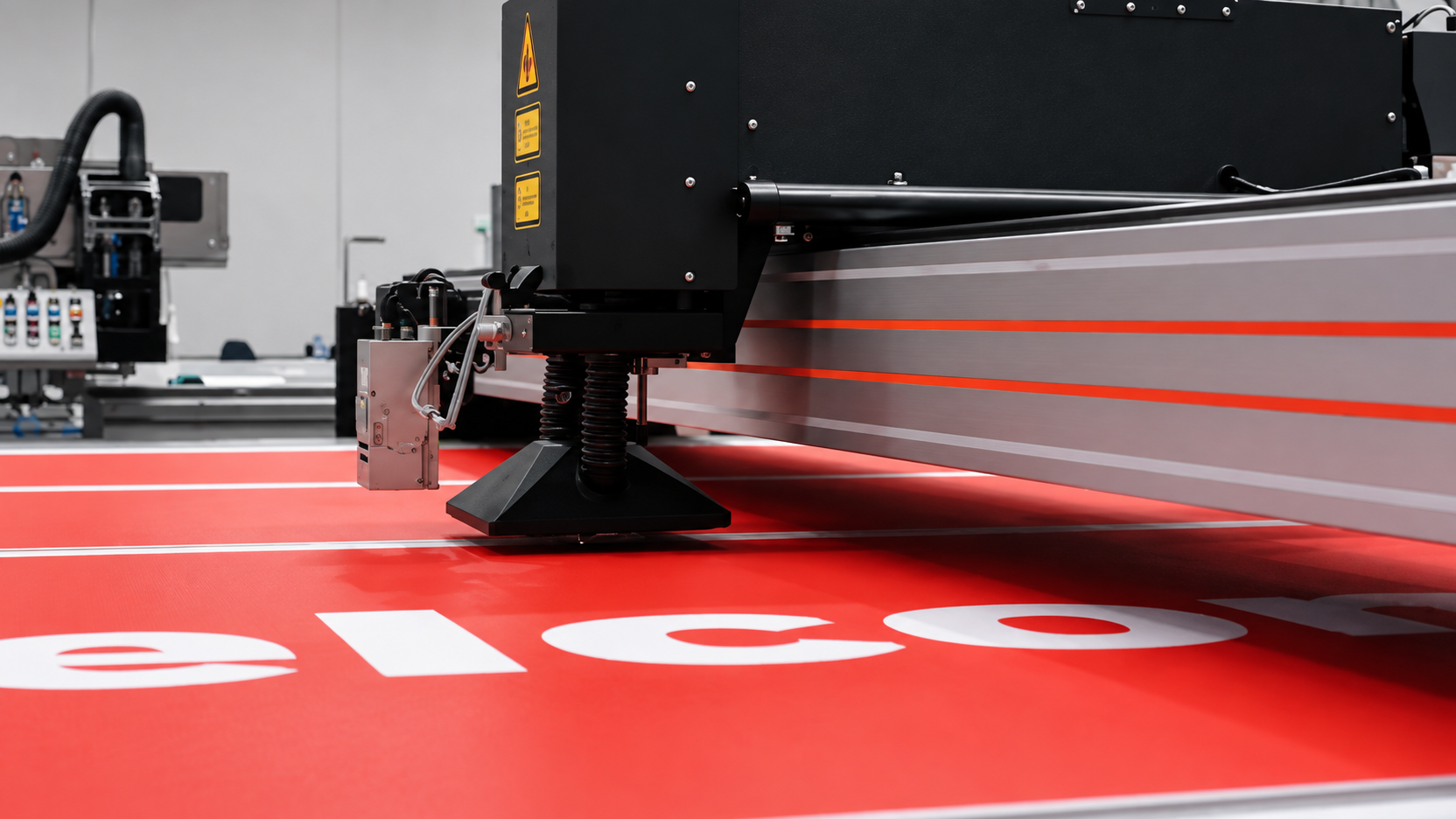
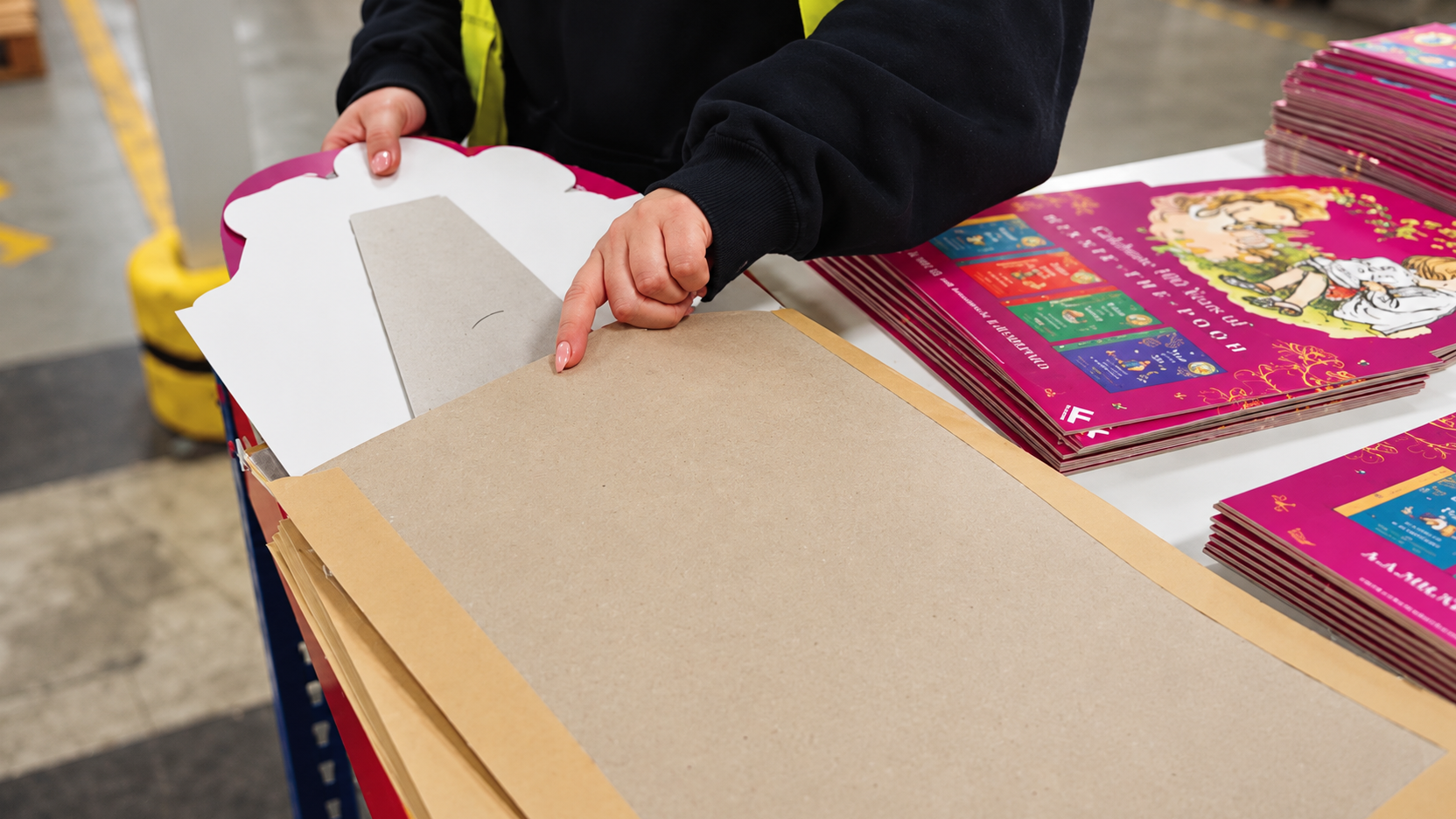
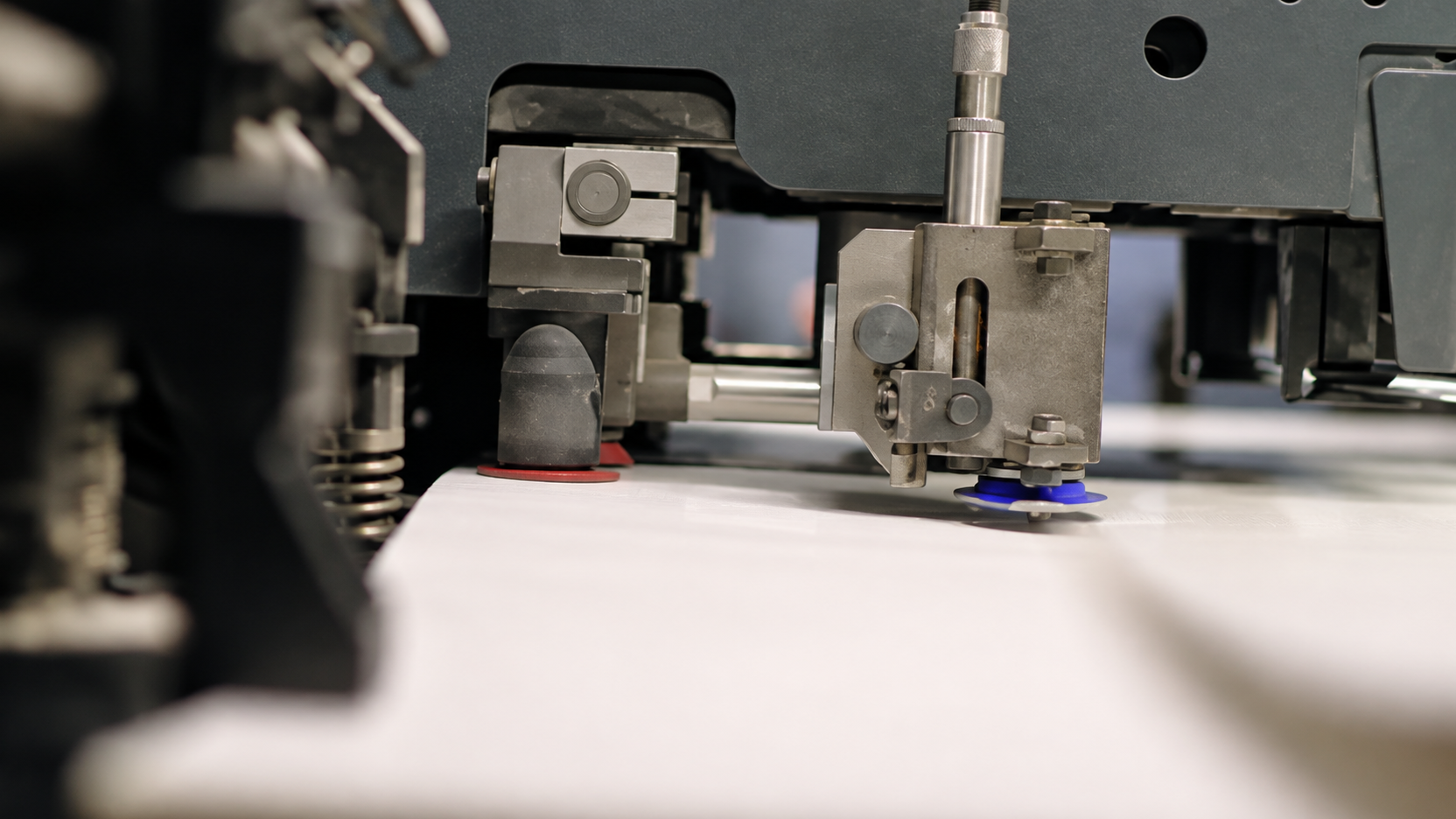
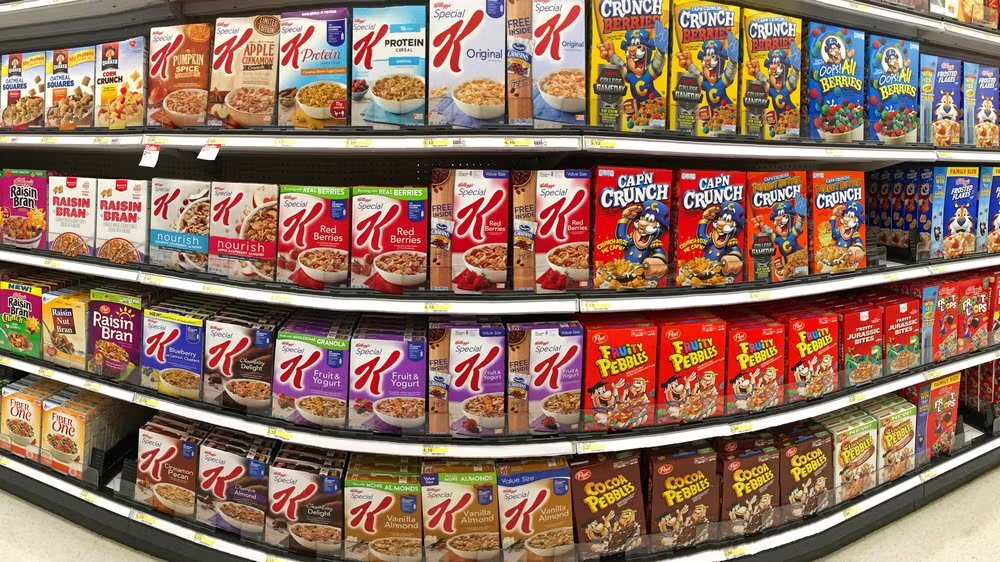




From Questions To Answers
Most of the ten questions share a root: a fragmented model, where strategy, creative, production, fulfilment and measurement sit with different suppliers and nobody owns the whole.
We replace that with a single execution system that takes brands from strategy to the store shelf. One partner, one system, complete accountability. It doesn't answer every question in the paper. It changes the shape of most of them.
Strategy & Ideation. Brand strategy, customer insight and market research that lives on shelf, not in a deck.
Design & Creative Deployment. Full-service creative, product engineering and production. Concepts buildable from day one.
Make & Buy. Procurement, manufacturing, supply chain and prototyping. €560m-plus of annual production spend, open-book.
Fulfil & Execute. Warehousing, co-packing, installation and track and trace. 99.99% on time, in full.
Measure & Learn. RetailOS makes physical marketing measurable in real time, live across 5,000-plus retail locations in 46 markets.
Three Moves That Cut Across All Ten Questions
Whatever a leader's top three questions turn out to be, the same three moves keep coming up in the answers. The paper works through each in detail. Here's the shape of them, and three traps to avoid on the way.
Govern and centralise data
Fix the foundation before the tools.
Fragmented data is the common root cause behind weak visibility, slow sourcing and AI nobody trusts. Visibility is the output of a clean data foundation, not something bought separately.
Govern AI, don't just adopt it
Win on effectiveness, not speed.
Top teams deploy AI at three times the rate of peers, the best at sixteen. The gap isn't hype. But moving fast on a weak foundation scales the problems faster. Accountability and human oversight first.
Realign to enterprise outcomes
Replace savings-only metrics.
A savings scorecard rewards the cheapest option even when the business needs resilience or speed. Outcome-based measures change what the team optimises for almost immediately.
Trap: the prettier dashboard
Bolting reporting onto fragmented sources.
It gives a nicer version of the same gaps. Risk caught on the dashboard after the event is a P&L line, not a saving.
Trap: the digitised old process
Buying transformation, automating the status quo.
47% of leaders cite integration complexity as the barrier to return. Most failed rollouts were run as IT projects, not change programmes.
Trap: the invisible function
Results that vanish into reports nobody repeats.
If finance and brand owners can't retell procurement's contribution unprompted, the value hasn't transferred, however real it is.

White paper
The 10 Questions Every Procurement Leader Is Secretly Asking.
The ten questions in full, with what each one really means, ranked by heat across the procurement leaders we spoke to. A twelve-minute read for anyone who owns a procurement number in 2026/27.
- All ten questions, in the words leaders used
- What it really means: the question underneath each one
- The heat ranking: dominant, high priority, rising, enduring
- Three moves that cut across every theme, and three traps
- How to pick your three and what to do with them
The purpose isn't to present a finished answer. It's to start a meaningful conversation. The more honest the discussion, the more valuable the outcome, for all of us.
Mitch Cornelia, Chief Operating OfficerParagon Brand Services, opening the ProcureCon roundtable
The people behind the paper
The two people who hosted the roundtable.
Thank you to everyone who joined us at ProcureCon. Pick the two or three questions that matter most and Lee or Marco will bring a focused working session: your context, our specialists, and the data to pressure test the answers.
Let's continue the conversation.
Pick the two or three questions that matter most to you. We'll bring a focused working session: your context, our specialists, and the data to pressure test the answers. No deck, no pitch.
Or call Lee on +44 (0) 7964 875 947 or Marco on +31 (0) 6 5573 3246